
Upholstery Cleaning in Forest Acres, SC
The dark band across the top of your sofa back is not shadow. It is years of hair oil from everybody who has leaned their head there. The armrest gone slick and dull is body oil too. That is the kind of thing upholstery quietly collects, and most of it comes out. We clean furniture in your home with the same low-moisture, soap-free system we use on carpet, the fabric is usually back to sit-on-able in a couple of hours, and three rooms of work runs $88. Reach us any time at 803-310-3848.
The tag tells us what to do
Before anything, we read the care code on the furniture tag, and this is not optional. W means water-based cleaning is fine. S means solvent only. WS means either works. X means vacuum only, no wet treatment at all. Get this wrong and you get water rings on silk, bleaching on rayon, shrinkage on linen. So we check the tag, then size up the fabric's age and condition. A hundred-year-old wingback in an older Shandon home does not get the same treatment as a five-year-old sectional from a big-box store.
Fabrics, one at a time
Microfiber resists staining but quietly traps dust and oil, and it usually looks dramatically different once we extract it. Linen and cotton spot easily and can shrink, which is exactly why keeping the moisture low matters so much on them. Wool blends need the right pH, because alkaline products chew up the fiber. Velvet is all about the nap, so we work along the pile direction and never against it. Performance fabrics like Crypton and Sunbrella respond fast and clean predictably. Silk and rayon are the fragile ones, so they get tested in a hidden spot before we commit to anything.
What we actually clean
Sofas, sectionals, loveseats, armchairs, wing chairs, recliners, dining chairs, ottomans, upholstered headboards, mattresses, office chairs, and outdoor cushions. The rule of thumb: if it is covered in fabric and it lives in your house, we can almost certainly clean it.
How the job runs
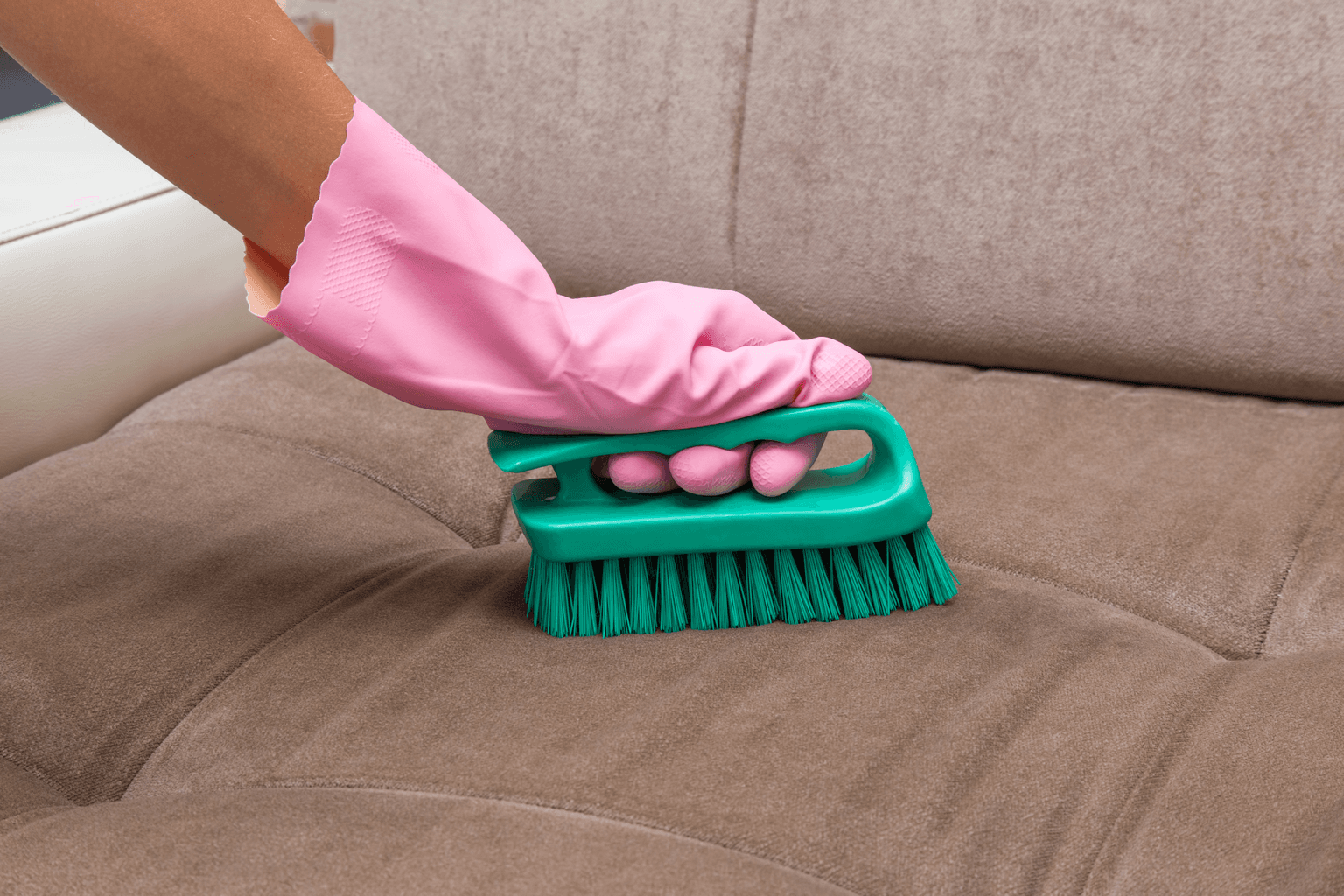
We start dry. Before any solution goes on, we clear the loose hair, dander, dust, and crumbs, and in a pet household this step alone makes a visible dent. We use tools that pull embedded hair out of the weave, not just the fluff sitting on top, so the wet pass works on real stains instead of pushing surface fuzz around.
Then the high-contact zones get pre-treated, the armrests, the headrest area, the front edge of every cushion, because those load up with body oil faster than anywhere else. That pre-treatment breaks the oil down so the main pass can lift it out.
The deep clean is our carbonating solution, soap-free so it leaves no sticky film to grab new dirt next week. We agitate gently with the grain of the weave, extract the loosened soil, and leave the fabric slightly damp rather than soaked. After that, individual stains get specific chemistry, enzymes for pet accidents, oxidizers for wine and coffee, careful solvent work for ink. If a stain has permanently shifted the dye, we tell you. Not everything is reversible, and an honest read saves you money. We finish by brushing the fabric back to its texture and going over the results with you while we are still standing there. Dry time runs one to three hours depending on the fabric weight and how humid the house is that day.
What your furniture is up against in Forest Acres
Pet hair and dander come first. Even in homes where the couch is theoretically off-limits, hair rides in on clothes and works into the weave. Over time the shed hair, body oil, and dander build a film that dulls the color and holds odor long after the dog has wandered off to a different room.
Pollen is close behind. The oaks and pines across this part of Richland County throw off heavy pollen from late February into May, and it comes through windows, through HVAC returns, and on your clothes, then settles into the cushions and keeps allergy symptoms going for months after the outdoor season ends.
Humidity adds its own twist. Fabric pulls moisture straight out of humid air, and in homes without steady climate control, upholstery here takes on a stale, musty edge over time. Cleaning extracts the microbes behind that and resets the fabric. And then there is the clay: sit on the couch in the pants you wore out to the yard, and whatever red clay was on them transfers to the cushion, one faint mark at a time, until the whole piece reads a shade darker than it should.
Skip the furniture store
A sofa that looks dingy after five or six years has usually just absorbed a lot of body oil. That is a cleaning job, not a shopping trip. A decent replacement sofa runs $2,000 to $4,000 right now, and a cleaning brings the one you own back to presentable for a small fraction of that. On the heirloom pieces that turn up in long-settled Forest Acres homes, replacing is not even on the table. You cannot buy another one. Proper cleaning keeps what you have, which is precisely why we take the fabric-ID step seriously when a piece is irreplaceable.
Questions I hear
How long until I can sit on it? One to three hours for most fabrics. Heavy stuff like chenille and dense linen takes the longer end, microfiber and synthetics dry fastest. Stand the cushions on end after we leave and it goes quicker.
Can you get the dog smell out of a couch? Usually, yes. Dog odor lives in the oil and dander built up in the fabric, and once that is extracted the smell goes with it. If a pet had accidents that soaked into the foam, that is a different problem that may need foam replacement or our pet odor service.
Do you clean antiques? Carefully, yes. We identify the fabric, test colorfastness, and dial the moisture and agitation way back for delicate materials. Horsehair, original damask, hand-embroidered pieces, all handled individually.
Anything I should do first? Pull personal items out from between the cushions and clear a path around the furniture so we can reach every side. Point out the stains you care most about when we arrive.
Book upholstery cleaning
Call 803-310-3848 or schedule online, any hour. We serve Forest Acres and every Richland County neighborhood on our route. Pair it with a carpet cleaning or an antibacterial treatment if you are doing a full household reset.